Built by people who run a cafe and a bakery
We built Roster Flow for the week we work: a bake that starts before the street is awake, a counter that opens when the bread is out, and every hour still reaching payroll by the pay run.


Two businesses, one week
Run a cafe and a bakery at once and the roster is never one thing. There is a crew that starts in the dark, a counter that opens when the bread is out, and a bench of casuals whose availability changes from one week to the next.
Those crews barely overlap, and they all come out of the same wage bill and the same pay run. A spreadsheet can hold the roster. It cannot warn you that the Saturday bake and the Saturday counter both have the same person on them, and it has no idea what anybody actually worked.
Roster Flow is the tool that week needs, and it does one job: get a small business from next week’s roster to approved hours in payroll. Everything else is somebody else’s product.
The shape of our week
Two trades on one roster, in the order the week runs.
Before dawn
The bake starts while the street is still empty, and that crew is gone by the early afternoon.
Morning
The counter opens when the bread is out, and it is busiest at breakfast and again at lunch.
Midweek
The quiet middle of the week, where one person too many on the floor is the whole month’s margin.
The weekend
The biggest bake and the busiest trading day land together, with casuals across both.
Pay run
Every hour worked, in the kitchen and at the counter, has to reach payroll and be right.
What that week needs from a roster
Each of these is in Roster Flow because a cafe and bakery week does not work without it.
A shift that crosses midnight is one shift
A 10pm to 6am bake is placed as one shift and counted as the hours worked, not as a negative number the next morning.
RosteringTwo counters, one roster
The cafe and the bakery can each be a venue with its own address and clock in distance, so the roster reads as who is where.
Multi venueCasuals say when they can work
Staff keep their own availability by the hour, in more than one window a day if they need it, so Saturday’s crew is visible before anyone rings round.
Availability by the hourClock in at the door, on their own phone
A 3am start becomes a time record rather than something remembered on Friday, with the distance from the venue recorded if you switch it on.
Clock in and outPrep and clean down are shifts too
They go on the roster with their own start and finish, so the hours that reach payroll are the hours worked, not the hours the doors were open.
Timesheets and approvalsApproved hours go to payroll
Once they are approved, hours go to Xero, or out as a CSV for any other payroll system. MYOB is coming soon. Pay itself stays in your payroll system.
Payroll sync
What it refuses to do
- Interpret awards or calculate pay. You set your own rates and loadings, and the figures on a roster are estimates from exactly what you set. Award interpretation stays in your payroll system, where it is maintained by people whose job that is.
- Score or grade your staff. Attendance is counted, not judged. Roster Flow will tell you there were three late starts. It will not tell you what that means about somebody.
- Block you. Rostering somebody over their unavailability gives you a warning with the reason, not a refusal. Software that refuses is software people work around.
- Charge for venues, or hold features back. Every feature except the payroll connection is on every plan, including the free one for up to 5 people. Sending approved hours into payroll is what a paid plan adds, and after that the price follows how many people you employ and nothing else. You can run the roster on its own, without the hiring half, and that is a choice at sign up rather than a cheaper plan: it costs the same and you can change it later.
- Lose a clock in. A time record is a pay record. Hours survive a failed payroll send, a lapsed card and a lost connection, and every change to one is recorded with who made it and why.
If your week looks like ours
The same two trades, each with a page of its own: the shape of the week, a sample roster, and the questions people in it ask.
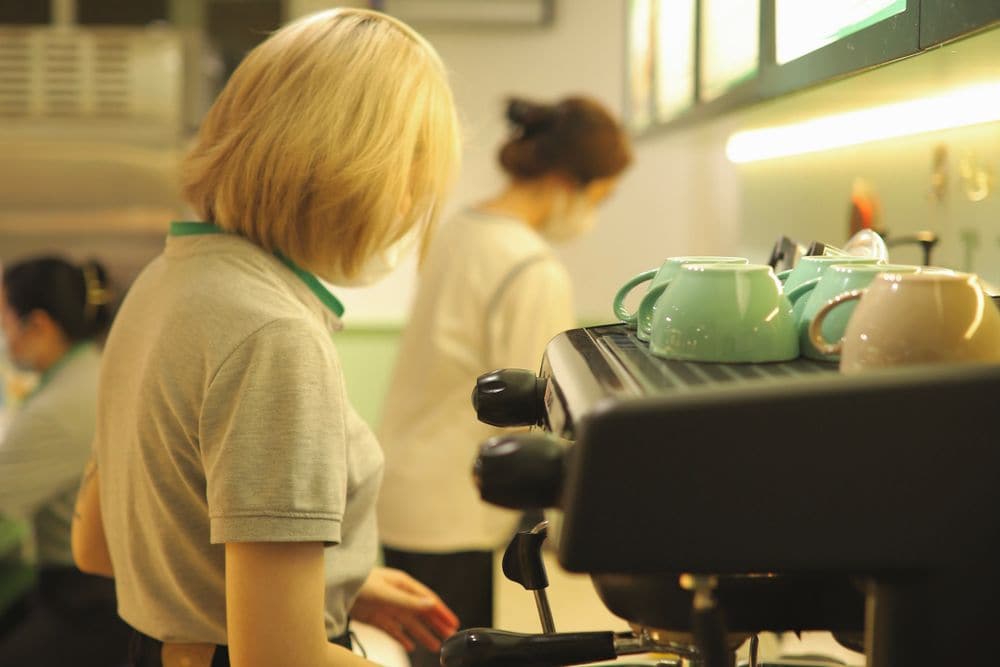
Rostering for cafes
A morning rush, a quiet middle of the week, and a bench of casuals whose availability moves.Read the page
Rostering for bakeries
An overnight bake and a daytime counter, rostered as two crews in one week.Read the page


Questions about any of this are welcome at hello@rosterflow.com.au, or through the contact page.